
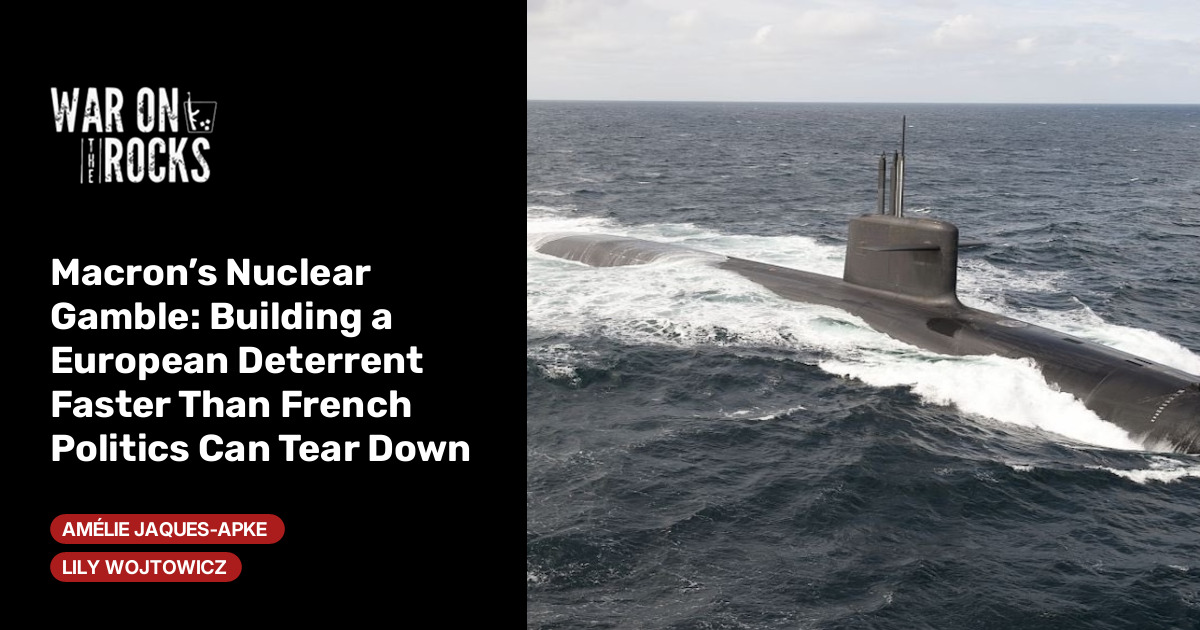
In early March, French President Emmanuel Macron stood at a windswept submarine base on the Breton coast and quietly buried four decades of French nuclear orthodoxy. The arsenal would grow. The numbers would be hidden. And for the first time, nuclear weapons that France built to defend Paris might one day be deployed to protect Berlin.
Three simultaneous shifts — an increase of nuclear warheads; an end to transparency over the size of the force de frappe; and the launch of “advanced deterrence,” a framework offering European partners strategic dialogues, invitations to French nuclear exercises, and the potential forward basing of

Our editorial team includes several staff writers, each contributing their specialized knowledge to enhance the depth and breadth of our event and story coverage.